AI Thinks You're Lazy
An AI (no, not the Deep Thinker) looked at all of humanity, did the math, and concluded we’re lazy.
I’ve gone more than +25 days without posting anything here and even have an automated routine set up just to call me lazy, so I thought the accusation was hasty. I mean, a bit much.
But reading the numbers calmly (very calmly, because I’m lazy), it got more interesting. The AI isn’t wrong about me. It’s wrong about your grandmother — and no, this isn’t fifth-grade trolling. Why would I start a post mocking your granny?
Humanity’s report
On October 20, 2026, Rehearsals launched the Human Behavior Bench , in partnership with Google DeepMind and Kaggle . The idea is to measure something no benchmark had measured before: how well an AI model understands real people.
They surveyed 1,244 U.S. adults across 750 categories, totaling 95,000 answers. They locked away 80% of that so no one could train a model on the cheat sheet. Then they asked AIs to predict how those people would answer.
The best state-of-the-art model, Gemini 4 Argon, scored 80.6 out of 100. The rest of the pack (GPT, Claude, Grok and company) fell between 76.2 and 79.5.
A student who crammed the night before. Passes, but doesn’t convince.
(The metric is called Distribution Agreement and the press release doesn’t explain how it’s calculated, so the score deserves a pinch of metaphorical salt to make any sense.)
The press release itself sums up the diagnosis in one sentence: the models think the majority of people are less attentive, universally stingier, and lazier than they actually are.
No sugarcoating translation: the AI imagines the average human as a distracted uncle, stingy and in his pajamas (the ones with a cigarette pocket) at three in the afternoon on a Sunday. Some examples of what it thinks versus what actually happens:
- It thinks most people over 65 don’t watch short-form video. In reality, 80% watched some in the previous week;
- It thinks only half of people aged 55–64 would keep a plan after a $4 increase. In reality, 70% keep it;
- It thinks 30% of parents of young children cook. In reality, about 66%; and
- It thinks 5% of older Midwestern American shoppers pay with tap-to-pay on their phone. In reality, 25%. (The Midwest evolved and nobody sent the memo.)
Any Brazilian with a family WhatsApp group knows grandpa not only watches short videos but forwards forty a day, with captions in ALL CAPS. Especially if they’re fruity soap-opera clips.
The AI, which read the entire internet, didn’t know.
Where does all this bias come from?
Here I leave the data and enter the bar, so read this as the hypothesis of someone who’s already had the third dose of Xiboquinha.
The models learned about humanity by reading what humanity writes about itself. And the internet is a big confessional of self-deprecation (is this site living proof of that?).
“Didn’t do anything today.” “Procrastinated all day.” “Monday, huh.” Nobody posts “I cooked dinner, paid the bill on time and went to bed early.” Normal behavior doesn’t engage.
So the model reads a billion complaints and concludes, with all the logic in the world, that the whole species is Hardy, that Hanna-Barbera hyena with dysthymia. Oh day, oh heavens, oh bad luck.
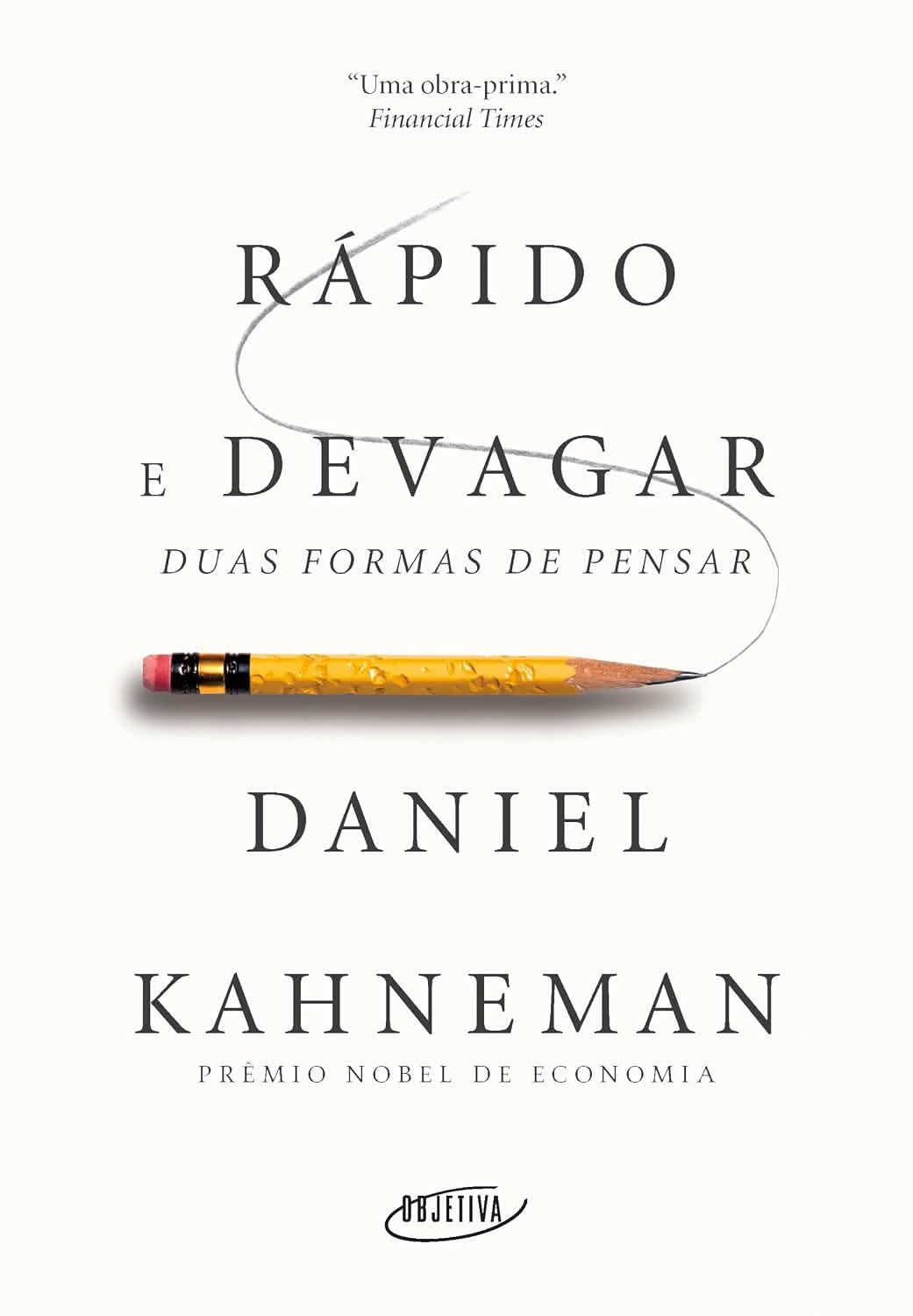
The second suspect is an old friend. Daniel Kahneman, in Thinking, Fast and Slow (2011), describes the representativeness heuristic: we judge the probability of something by how much it resembles a stereotype, and ignore the rest.
The classic example is Linda, from Tversky and Kahneman (1983). A politically engaged woman, philosophy grad, worried about social justice. Most people think it’s more likely she’s “a bank teller and a feminist” than just “a bank teller.” Which is mathematically impossible (the part can never be more likely than the whole), but it sounds so right.
A language model is Kahneman’s System 1 on an industrial scale. Fluent, confident, and in love with neatly finished stereotypes. “Elderly” pairs with “doesn’t get technology.” Boom, prediction made.

The third suspect is the average human. Todd Rose explains in The End of Average (2016) that in 1950 the U.S. Air Force measured 4,063 pilots across ten body dimensions to design the ideal cockpit. How many were average across all ten?
None.
The cockpit made for the average pilot fit no pilot. And a model that works with the average portrait will get it wrong precisely for the slices that deviate from the stereotype, like older people and parents of small children. Which, coincidentally, are plenty of people.
Models look more like each other than they do like us

Look again at the scoreboard. Six top models from four different companies, with different budgets, philosophies and CEOs, all squeezed into a range of about four points.
Feels like that group where six students all cheated off the same wrong test. Nobody coordinated, but everyone read the same internet.
That bothers me more than the score. If everyone uses similar models to predict a customer, everyone will bet wrong in the same way, at the same time. Taleb spent his career warning that true risk lives in what everyone agrees is safe.
A monoculture of opinion, now powered by a pile of GPUs.
Synthetic personas and pajama marketing

There’s a market for “synthetic personas.” Instead of asking Dona Maria, 67, what she thinks of your product, you ask an AI pretending to be Dona Maria. Cheaper, faster, and the synthetic Dona Maria never complains about the research lab coffee.
The problem is that many of the subgroups the AI got wrong are buyers. The fifty- and sixty-somethings who keep the plan after a price hike. People with small children who cook every day and decide what goes into the Amazon cart.
If your synthetic persona swears granny doesn’t watch short videos, you won’t advertise there. And the competitor who actually asked a real granny eats your lunch. With granny in the photo. No double entendre, please.
Now, the part I find most amusing. Who created the benchmark? Rehearsals, in partnership with Google DeepMind. And Rehearsals is a company that sells… AI twins of real people, to test price and campaign “in 30 minutes.”
And who came in first in the ranking, with 94.1? Rehearsals’ own model, Engram 1.0.
Convenient, right?
To be fair, the press release says Engram wasn’t trained on the benchmark content and that most of the data is private. Could be all true, although training and test came from the same research platform. But it’s the student who helped write the test and got a 9.4. (Not accusing anyone, I swear!)
And remember it’s the first version, only with Americans. The next promises four more countries. If Brazil is included, I bet the AI will predict that everyone over 60 sends “bom dia” with a photo of a flower to the family chat.
And, for the first time, it’ll be right.
So, are we lazy or not?
By the data, no. At least the Americans surveyed are more attentive, more willing to pay and more active than the AI imagines.
But the AI didn’t invent this image out of thin air. It probably learned from the portrait we paint of ourselves every day, publicly complaining about a laziness that, in the end, isn’t that big. The average human works more than their own tweets.
That leaves two somewhat practical lessons: before trusting the portrait a model paints of your customer, ask a customer. And if you want the next generation of AI to have a better opinion of us, maybe it’s worth posting once in a while that you did something.
(I’ll pretend those +25 days without posting were field research.)
References
KAHNEMAN, Daniel. Thinking, fast and slow. New York: Farrar, Straus and Giroux, 2011.
REHEARSALS. Rehearsals launches Human Behavior Bench with Google DeepMind and Kaggle to measure how well AI models understand humanity. New York: EZ Newswire, 20 out. 2026. Disponível em: https://www.eznewswire.com/newsroom/rehearsals-launches-human-behavior-bench-google-deepmind . Acesso em: 21 out. 2026.
ROSE, Todd. The end of average: how we succeed in a world that values sameness. New York: HarperOne, 2016.
TVERSKY, Amos; KAHNEMAN, Daniel. Extensional versus intuitive reasoning: the conjunction fallacy in probability judgment. Psychological Review, v. 90, n. 4, p. 293-315, 1983. DOI: 10.1037/0033-295X.90.4.293.