The Elephant and the Goldfish
The Legend of the Elephant and the Goldfish
Elephant remembers,
goldfish swims and forgets:
the lake flows.
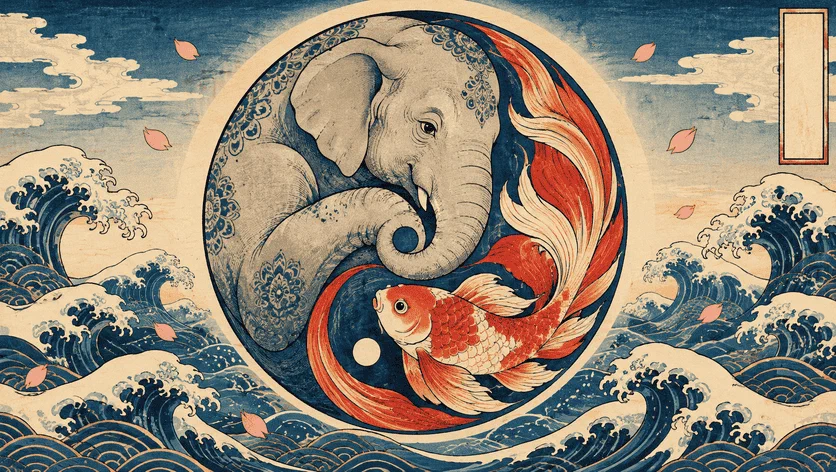
No temple in Japan has a record of this legend. I made it up just now, at the bar counter, but every good framework deserves an origin myth and this one cost nothing.
Ask an AI to write a plan and then ask the same AI to review the plan. Spoiler: it’ll think it’s excellent. No one is impartial about their own work, not even those with tokens on their résumé.
That’s roughly how I stumbled across the Elephant-Goldfish Model (EGM), an open source plugin created by folks at Google for specification-driven development with AI agents. The name is ridiculous, the idea is good, and the combination is suspicious enough to deserve a post.
Who remembers everything and who remembers nothing
The premise fits on a bar napkin. There are two types of agent, and each does what the other can’t.
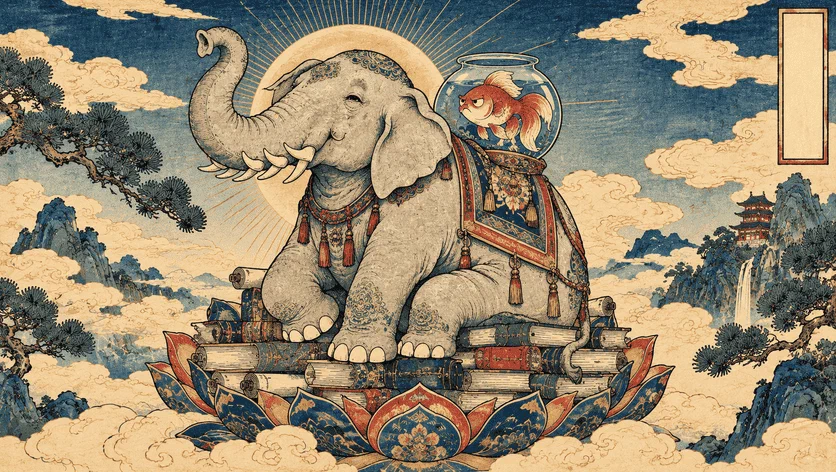
The Elephant carries the entire context: system history, architecture, boundaries between components, user journeys. It’s the one that talks to you, does brainstorming and writes the specification. In Japanese Buddhist iconography, by the way, the bodhisattva Fugen rides a white elephant, which proves nothing but gives the creature a bit of pedigree.
The Goldfish carries nothing. Each subagent is born from zero, reads only the spec draft and the real code, and starts firing criticisms without having heard your side of the story. No conversational bias, no affection for the plan and none of that embarrassment about contradicting the boss.
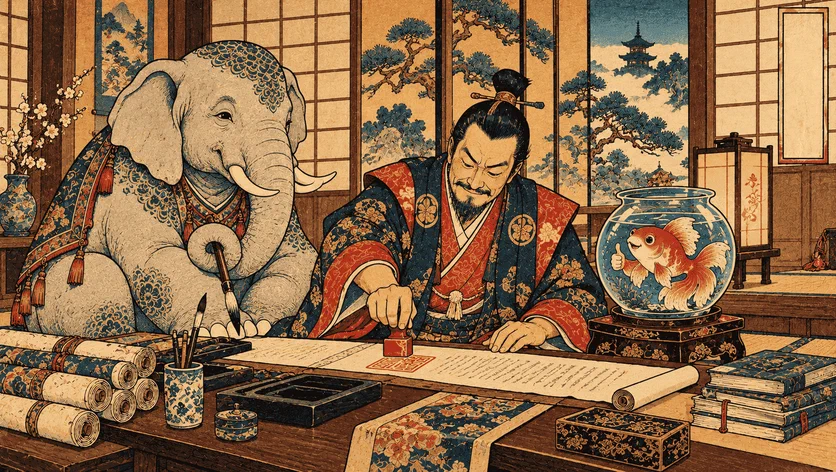
Between the two sits the third character: you. The documentation insists on this: the AI explores and audits, the human decides and is responsible for the result. Taleb would call this skin in the game (whoever signs the decision pays the bill, and the goldfish pays nothing).
Biology lies, but the metaphor works
One detail that amused me: the two animals are kind of fake news. Goldfish retain information for months, and the three-second memory is an urban legend (another legend, only this one stuck). Elephants have excellent memory, but the reputation for never forgetting everything is folklore exaggeration.
The method uses the common-sense versions, which make for a good metaphor. Nobody here is doing zoology, which is a relief for zoologists and for Dory.

How it works in practice
The basic flow has seven skills, but the main path uses four commands:
/egm-brainstormopens a conversation to refine the idea and launches a shoal of Goldfish (six different lenses, according to the docs) to try to tear down the concept. The result becomes aconcepts_brief.md;/egm-draftturns the brief into a design doc insidedocs/designs/, section by section;/egm-reviewsends new Goldfish, with zero context, to assess completeness, clarity, self-sufficiency and readiness for implementation; and- a real human reviews the PR, because the tool insists it’s not a replacement for supervision.
After implementation, /egm-drift-report compares the spec to the code and points out where they diverged. The recommendation is to run it once a week, like a routine dentist visit, except the tooth is your architecture. The human chooses whether to correct the document or the code.
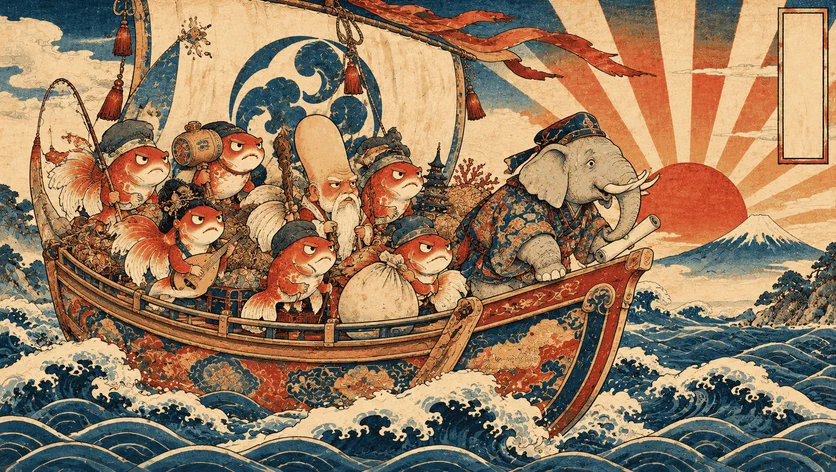
The Goldfish have personas defined in the agents/ folder: Design Critic, Naive Reader, Tech Lead, Codebase Auditor, Structural Validator, Style Editor and Zoom Out Architect. Seven of them, which reminds me of the Seven Lucky Gods, except none of these are going to bring you luck, only spend tokens.
An example to laugh and understand
What follows is a hypothetical illustration of mine, not a real output from the tool. Imagine you want to add a newsletter to your blog.
SEM O EGM:
> "IA, escreve o plano da newsletter"
> "IA, o plano está bom?"
> "Excelente plano, parabéns pelo bom gosto"
> (três semanas depois) descobre que ninguém pensou em descadastro

COM O EGM:
> Elefante conversa, entende o blog, escreve a spec
> Goldfish Naive Reader: "Onde está o fluxo de cancelamento?"
> Goldfish Tech Lead: "Quem garante a entrega de e-mail em escala?"
> Goldfish Codebase Auditor: "Esse endpoint já existe, para que criar outro?"
> Você ajusta a spec antes de escrever uma linha de código 🐠
Notice that the Naive Reader gets it right precisely because it knows nothing. Steven Pinker calls this the curse of knowledge: someone who knows too much can no longer see what’s obvious to a newcomer. The Goldfish is the curse of knowledge inverted, sold as a feature.
It’s also the technological cousin of the rubber duck programmers talk to, except the duck listens and the goldfish answers. If the duck started reading, its job market would get much harder.
What I think (you asked for an opinion, or would have)
The part that convinces me is economic. Fixing a spec costs a conversation. Fixing already-written code because of a bad spec costs a week and an existential crisis. Moving criticism to before the code is the cheapest engineering decision since someone invented git revert.
The second convincing part is bias reduction. An agent with the whole conversation in its head tends to defend what it proposed, and that’s just a mirror of what humans do in meetings. A reviewer with no context is harder to seduce.
Now the caveats, because no one is a saint, much less a goldfish:
- Goldfish and Elephant are generally the same model under the hood. Zero context eliminates conversational bias, but it doesn’t remove blind spots the model carries out of the box. This is my reading; the documentation doesn’t state it;
- The documentation itself warns that the review generates a lot of feedback by design and tells you to use the relevant bits and ignore the rest. Anyone who’s faced eighty code review comments knows triage gets tiring too;
- The project is young, has few commits and a note that it’s not an officially supported Google product. The site claims thousands of Google engineers use it, but that’s a claim from the page itself, not an independent audit; and
- To fix a one-line bug, using a shoal of fish is killing a mosquito with a bazooka. The guide agrees: if it can be solved on the first try, just solve it.
Even so, I left the README.MD with the feeling that the core value is independent of the tool. You can apply the idea with a fresh chat by pasting only the spec and asking a stateless model to destroy the plan. According to the docs, this manual version costs nothing but your time and serves to test whether the responses improve before you install anything.
If you want to install
The laziest way is to ask your agent: Install https://github.com/google/elephant-goldfish-model. For those with more ceremonial taste:
# Claude Code
claude plugin marketplace add google/elephant-goldfish-model && \
  claude plugin install egm@egm

# Codex
codex plugin marketplace add google/elephant-goldfish-model && \
  codex plugin add egm@egm

# Antigravity
agy plugin install https://github.com/google/elephant-goldfish-model
In Claude Code the commands gain the prefix /egm:, so the brainstorm becomes /egm:egm-brainstorm.
What remains after the shoal
There is a true legend (of Chinese origin, but very popular in Japan) in which the carp that manages to climb the Dragon Gate waterfall becomes a dragon. Each spec goes through its own Goldfish waterfall. Those that get through become code. The others become cold coffee.
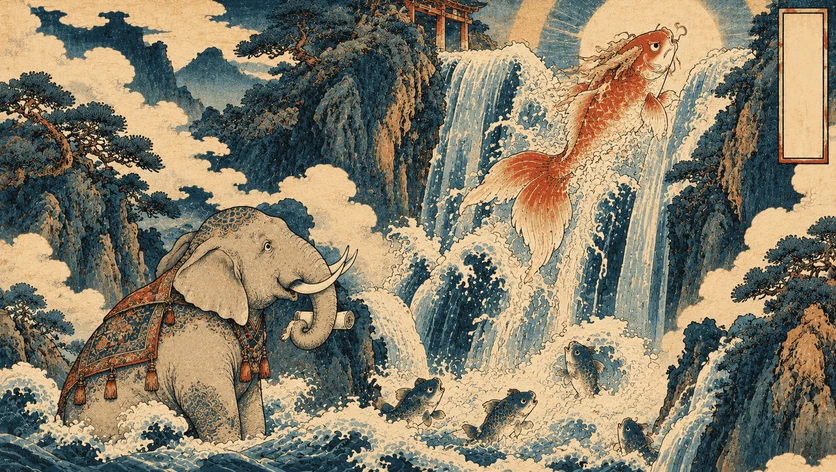
In the end, the method returns an uncomfortable truth: the most useful AI isn’t always the one that agrees with you. Much of the value is having one agent that remembers everything to write and another that remembers nothing to doubt. It works the same with humans, which explains why no one reads their own text with fresh eyes.

(This text, by the way, didn’t go through any Goldfish. If you find an error, the goldfish is you now)
To see where I got all this:
- Repository: google/elephant-goldfish-model
- Official site: egm.dev
- Getting started guide: getting_started.md
- Essay that originated the idea, according to the README: Elephants, Goldfish, and the New Golden Age of Software Engineering , by Dave Rensin
All images in this post were generated by goldfish.
