Ode to failure and why that's a good thing
There’s a strange thing that happens with failure: everyone venerates it after it becomes a springboard to success. Before that, it’s a source of silent shame, of 3 a.m. existential crises, and of endless Reddit scrolling trying to figure out why your life looks like a beta version of everyone else’s — and why you feel like an NPC.
But what if failure — real failure, the kind with no cinematic redemption arc — is exactly what needs to happen?

The sci-fi of success on social media
I’d been turning this idea over for a few days, after reading a fantastic book on the subject. How can everyone be so incredible? (plot twist: it’s a lie)
I saw that YouTuber Cá Fernandes made two videos that touch on this delicate point with surgical precision.
Watch them and come back. (Part 1 and Part 2 )
Yes, exactly. What you always suspected: the internet doesn’t show you what’s normal. It shows you what’s extreme. And when you consume the extreme every day, the extreme becomes the new normal. And your real life — with the bills paid on time and the 2013 car that still runs fine — starts to look like a walking failure.
The algorithm has no interest in showing you that most people have two or three close friends; that almost nobody knows exactly what they want out of life at 25, 30, 40, or 50; that work has always been, first and foremost, a responsibility — not a daily epic journey of self-actualization.
Coaches and mentors (a post about that coming soon) figured this out and monetized it: they created an invisible clock where you should have started your business at 18, invested at 21, and been a millionaire by 25.
Anyone who reaches 35–50 with a steady job, rent paid, and a more or less functional life is now diagnosed as having a “small mindset” and possibly being a failure (thanks, burnout society).
Convenient, isn’t it?
The story that doesn’t show up on Instagram
- Jeff Bezos received $250,000 from his parents to found Amazon;
- Bill Gates’s mother had direct connections at IBM; and
- Warren Buffett’s father was a congressman.
I’m not saying these people didn’t work hard or didn’t deserve their success. I’m saying the version that reached you is a well-produced fanfic of what actually happened. Pure storytelling.
Everyone’s “zero” is different — not exactly meritocratic, is it? And that’s fine. The problem is selling the myth of a universal zero as a self-help product, because whoever buys the myth also buys the guilt for not having made it there yet.
Even the most admirable figures failed — spectacularly
As I mentioned above, this post came to mind after reading a book called “In Praise of Failure: Four Lessons in Humility,” which opens with a disconcerting premise: we are biologically programmed to fail. Death is the frame for everything. The rest is decoration.
But what interests me in the book isn’t the bar-stool nihilism that sentence implies — it’s the next point, far more unsettling: the author picks four historically admired figures and spends the whole book showing how each of them, in their own way, embraced failure as a vocation.
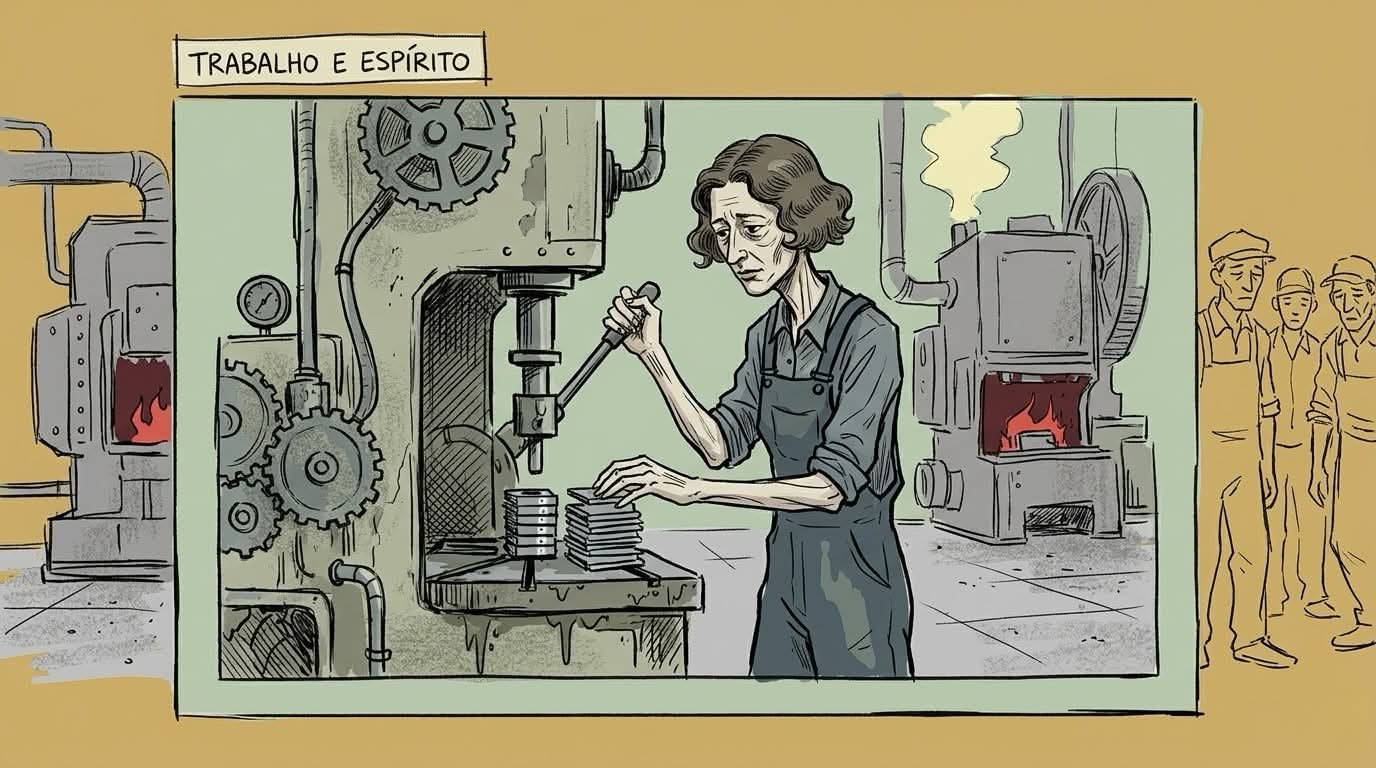 Simone Weil, one of the most brilliant philosophical minds of the 20th century, was chronically at odds with her own body — and yet she went to work in factories she couldn’t physically bear, fought in wars where she wounded herself with her own weapon (not in combat, during training), and in the end starved herself to death, refusing food while workers went hungry. A spectacular physical failure in service of an intellectual and spiritual mission that was not quite equally spectacular.
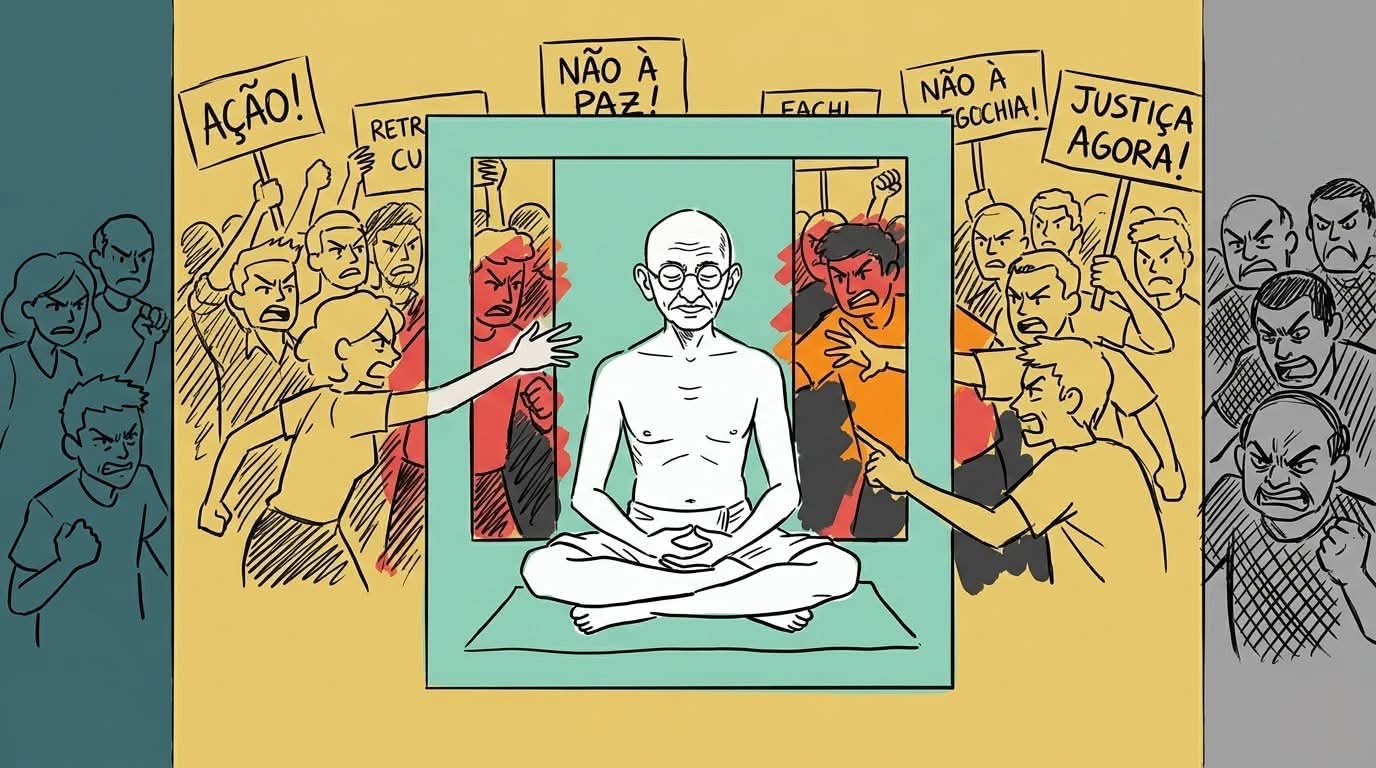 Gandhi, the global symbol of non-violence and peaceful resistance, built a personal life around an obsessive performance of purity — which in practice placed his followers under the absolute dominion of his will. The apostle of liberation who, in the microcosm of his own community, operated as a small dictator of virtue. India won its independence; Gandhi’s utopian vision of how people should live together failed completely.
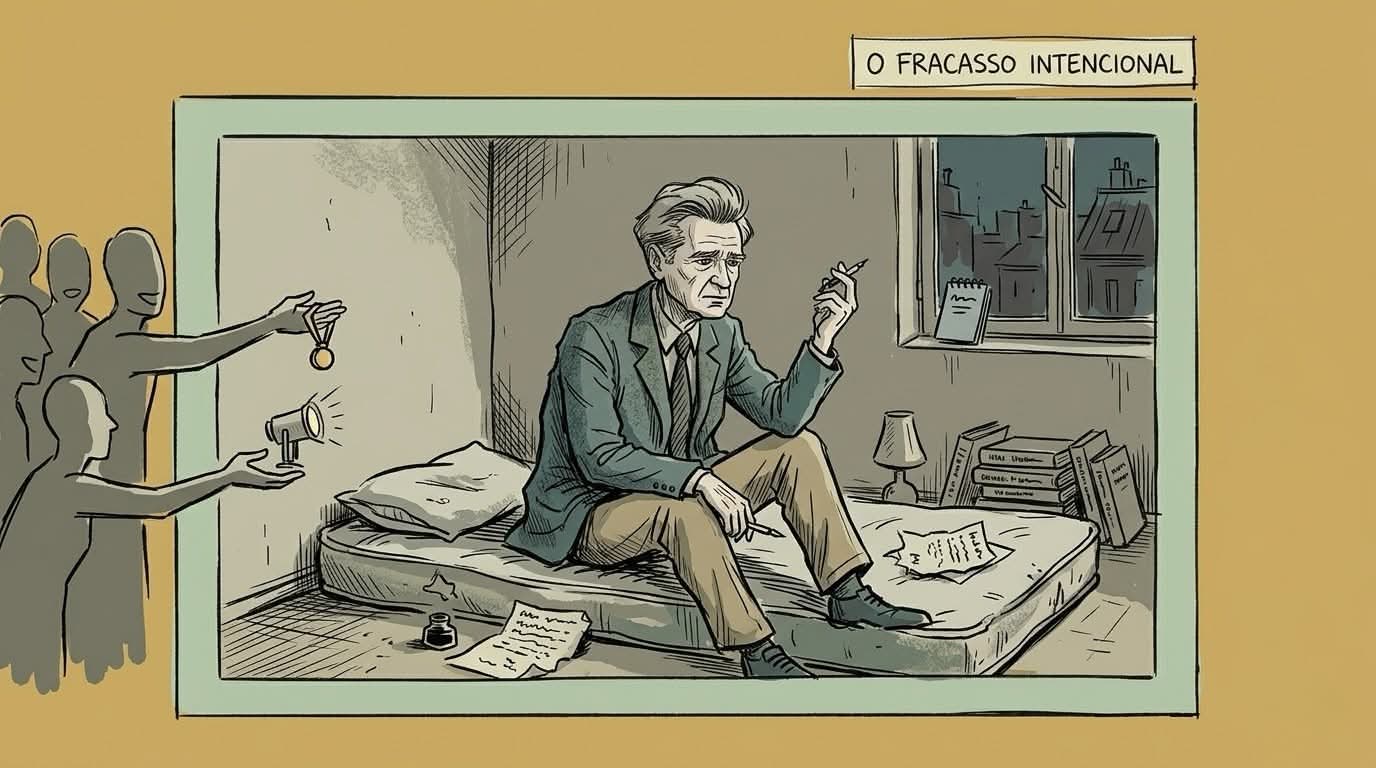 E. M. Cioran, the Romanian philosopher based in Paris, went further: he made failure a conscious life project. He rejected fame, productivity, and social utility. He wrote aphorisms heavy as stones in a Paris apartment (reminds me of someone I know…) that never had decent heating. And in the end, dementia arrived before he could execute his planned suicide — failure as destiny’s final joke. His friend and correspondent Samuel Beckett summed up the partnership well: “Amidst your ruins I feel at home.”
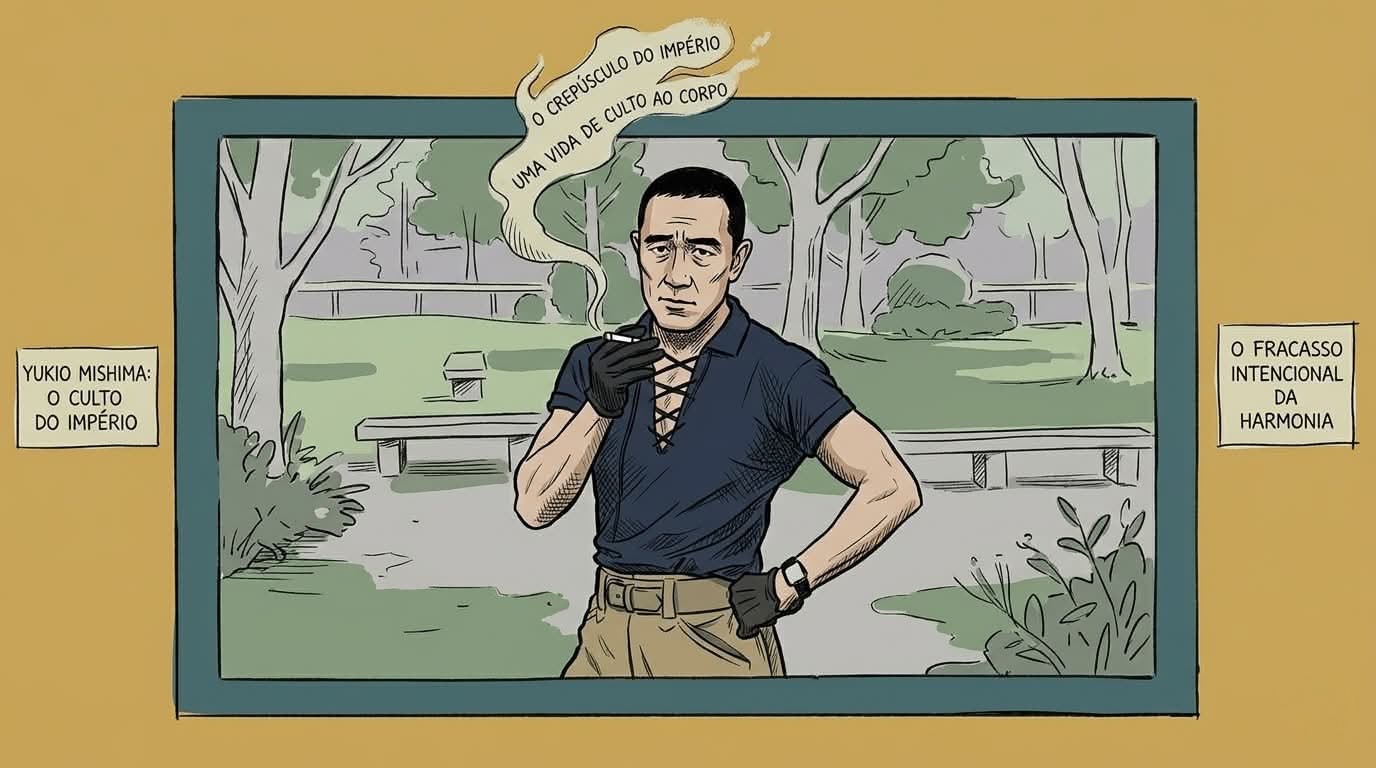 Then there’s Yukio Mishima — the best (or worst) saved for last.
Mishima was arguably the greatest Japanese writer of the 20th century, nominated for the Nobel Prize three times, a man who spent his entire life obsessed with an honorable death in the samurai code. In November 1970, he executed the plan he had been crafting for years: he led a coup attempt with a group of followers, seized the headquarters of the Japan Self-Defense Forces in Tokyo, went out onto a balcony to give a speech calling on soldiers to rise up for the Emperor — and was met with laughter and jeers. The soldiers didn’t want samurai philosophy. They wanted lunch — and honestly, who could blame them? 🍛
Mishima went back inside, undressed, and performed seppuku with the ceremony he had rehearsed with the precision of a screenplay. His second-in-command, tasked with decapitating him afterward, needed three attempts (very efficient, that one) to finish the job. Japan’s greatest writer, who had dedicated his life to planning a perfect and meaningful death, died in a bloody embarrassment that took longer than it should have.
The literary contrast is his rival, Osamu Dazai — who attempted suicide multiple times before finally succeeding. Two Japanese writers obsessed with death: one trying to escape it, the other trying to master it. Both failing in opposite and equally spectacular ways.
The book’s thesis is precise: real failure humiliates. If it doesn’t humiliate, it’s not failure — it’s just self-help marketing dressed up as vulnerability. The difference between Silicon Valley’s “fail fast” and actual failure is exactly that: one is a calculated, invented springboard; the other is the floor hitting your face without warning.
And it’s the second kind — the one that actually hurts, the one with no pretty narrative and no guaranteed redemption — that holds anything transformative. Not because “everything happens for a reason” (I’d hate that phrase with every fiber of my soul, if I had one). But because genuine failure is the only event powerful enough to shatter the illusion that you’re in control of anything — and it’s precisely there, in the ruins of that illusion, that anything worth something begins.
Ode to ordinary failure
There’s something liberating about accepting that failure isn’t a system anomaly — it’s a feature. Entropy exists. Everything tends toward chaos. Just keeping your life running, your relationships alive, and your health in check is already, in itself, an everyday victory that no one will ever post to their stories.
Living a normal life — with unproductive days, a body that changes, friends who drift away, work that sometimes is just work and nothing more — is not failure. It’s the default condition of human existence, which the algorithm refuses to monetize precisely because it’s too universal to generate engagement.
So yes: I’ve failed at plenty of things. Some of them with considerable creativity and even enthusiasm. And here I am, still thinking it all through.
Failure isn’t the end of the game. Sometimes it’s just the loading screen before the next level.
And if there’s no next level?
Well… at least you’ve got an interesting story to tell…
(just don’t go playing the humble hero about it on social media)