Being Great is Embracing the Void
There’s something fundamentally suspicious about people who never stop. Who expand, grow, accumulate—and never quite get to where they want to go. (Not my case, I swear)
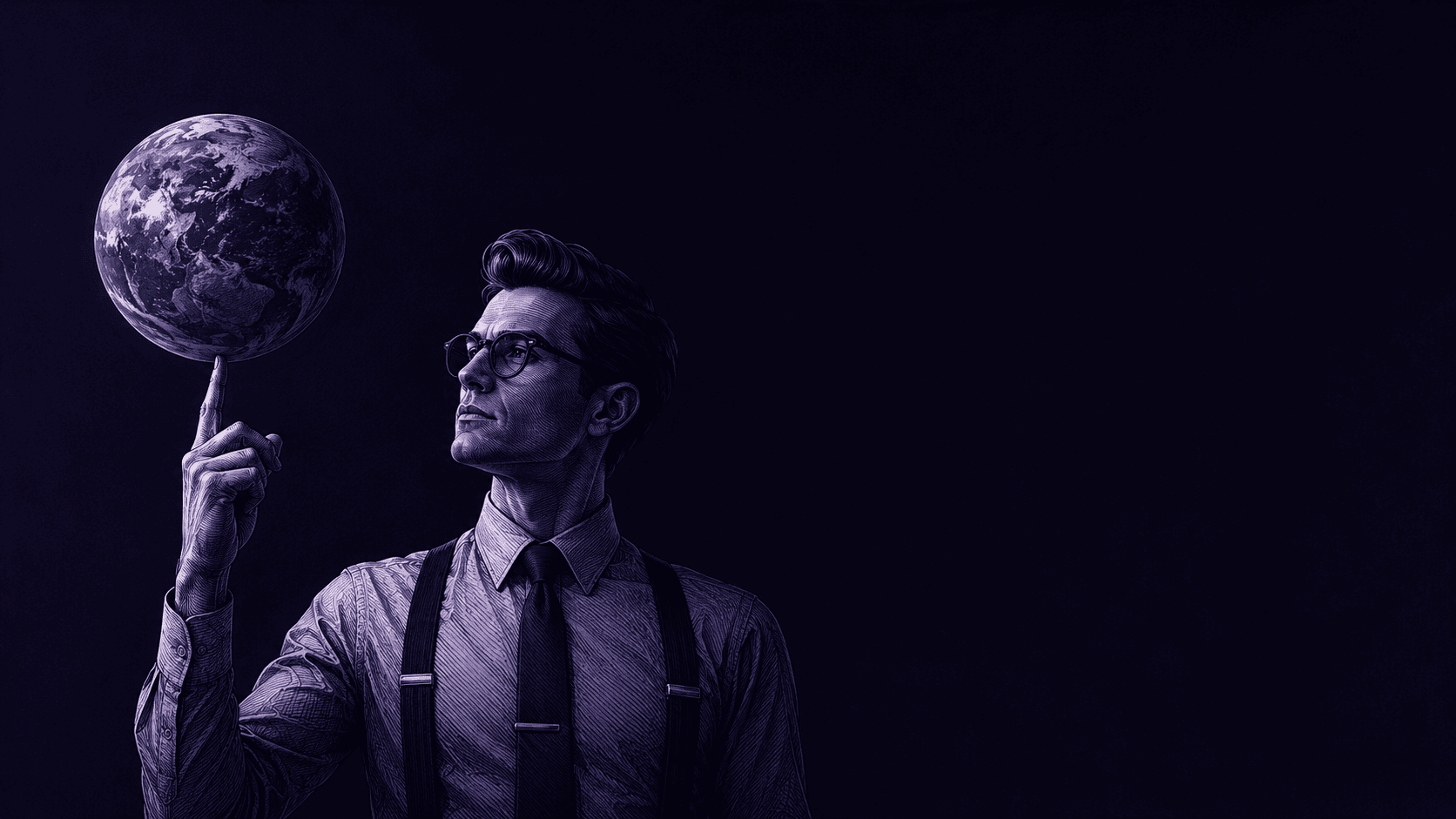
At some point, they stopped asking “what do I want?” and only started asking “how much more?”.
Blaise Pascal, who was a mathematician, physicist, philosopher, and, apparently, a real party pooper, had the answer long before the question existed:
“Tout le malheur des hommes vient d’une seule chose, qui est de ne savoir pas demeurer en repos dans une chambre.”
I don’t understand French either, but I found the situation beautiful. In free translation:
All the woes of humanity come from a single thing: the inability to remain quiet in a room.
It might sound like an Instagram coach’s conclusion, but it’s from a man in the 17th century who invented probability theory.
The problem isn’t ambition. The problem is what resides in the place where ambition should be when it ceases to be sufficient.
The Universe Has a Similar Problem
The universe is expanding. This isn’t a metaphor; it’s pure physics. Since the Big Bang, everything that exists is moving away from everything else, and this distancing is accelerating.
Galaxies are drifting away from galaxies. Stars are moving away from stars. Clusters are distancing themselves from other clusters. The Moon is moving away from the Earth by about 4 cm per year, and the Earth is drifting away from the Sun by about 15 cm per year.
But what’s in between galaxies? Nothing. An immense, growing void, mathematically proportional to the size of the universe that contains it. A void so vast that, even traveling at the speed of light, we wouldn’t be able to reach other galaxies because their expansion is faster than light.
So, the larger the universe, the greater the void between the parts.
This isn’t a design flaw. It’s the structural condition of anything that keeps expanding.
The technical name for the force driving this accelerated expansion is dark energy (anyone see a reference to the Black Triad here?), and physicists agree it exists, represents about 68% of the total content of the universe, and that absolutely no one really understands what it is.
(Reassuring, isn’t it? Two-thirds of the universe is this thing that exists, and no one knows how to explain it.)
Now swap universe for ego and recalculate.
Grandiosity as a Survival Strategy
No one wakes up on a sunny morning and decides to be grandiose out of malice.
Grandiosity, in most cases, starts as a defense against irrelevance, against fear, against that voice that says you’re not enough. The problem is that it’s a defense that works. Until it stops working.
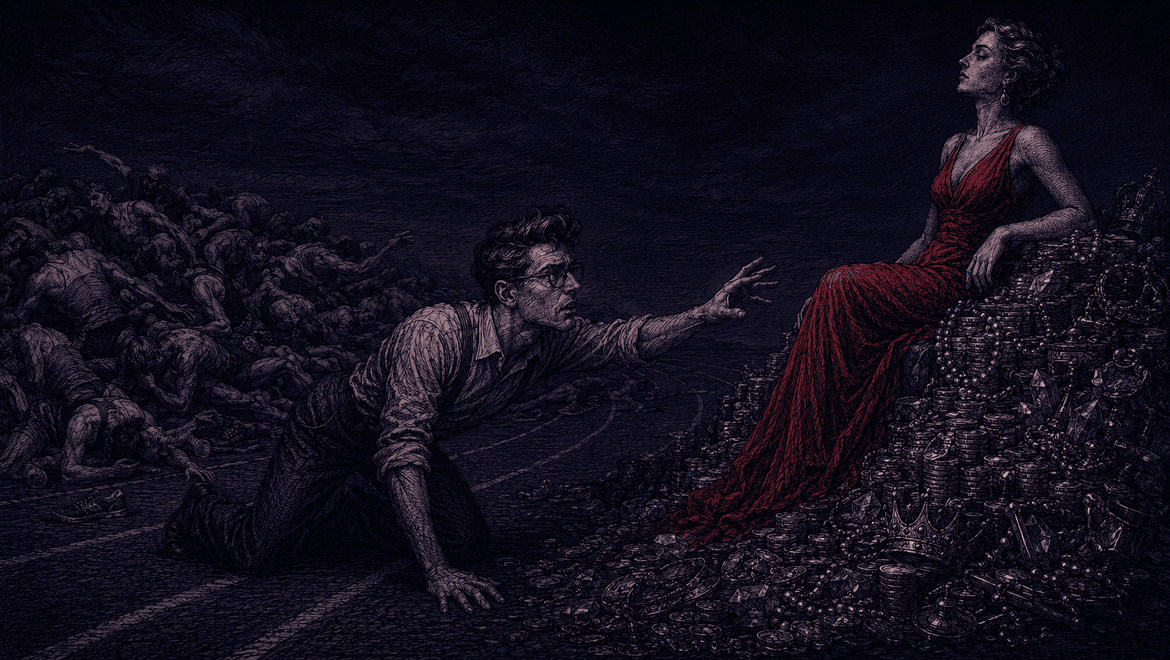
Behavioral psychology calls it hedonic treadmill—the phenomenon where each achievement raises the pleasure reference point, requiring the next, bigger achievement to produce the same effect. It’s a debt of neurotransmitters that never resets. A black hole that grows in direct proportion to your attempts to fill it.
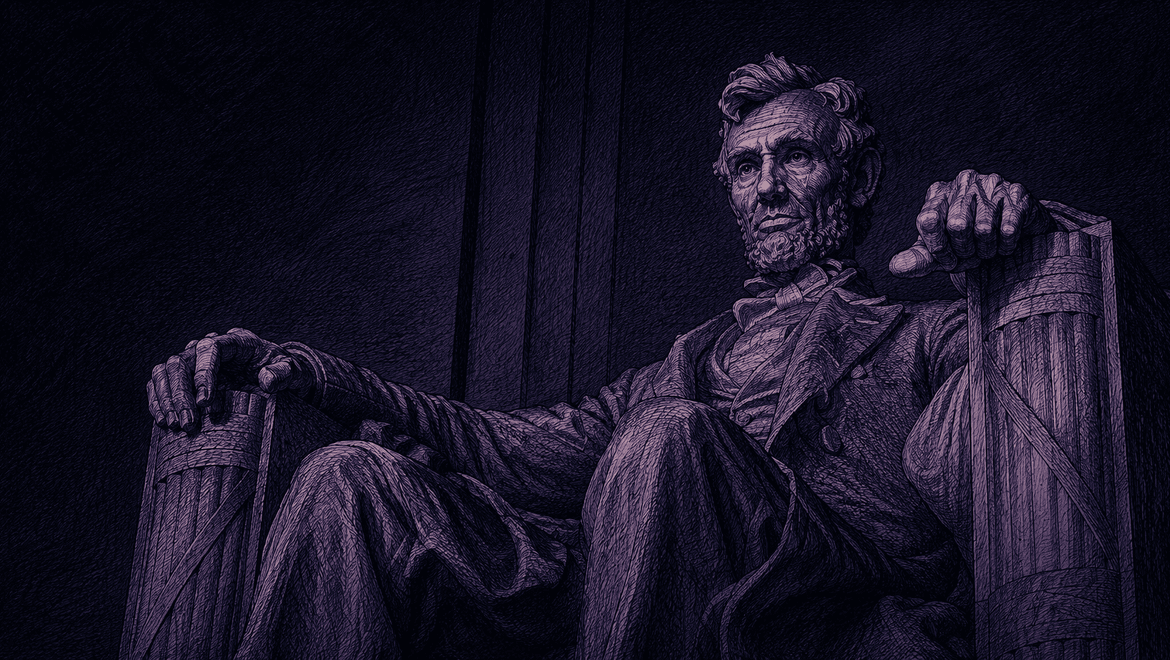
Abraham Lincoln, who understood a thing or two about human nature, after all, presided while a civil war raged while losing children, used to say that the most reliable way to gauge a person’s character was simply to give that person power.
Not take it away. Give it.
What power reveals isn’t corruption. It reveals the void that was already there and just ran out of excuses to hide.
What the Great Ones Do with the Blank Space
When someone reaches a level of resources that eliminates the practical limits of existence—when you can eat what you want, go where you want, buy what you want, hire who you want—the void stands there with no alibi.
There’s no more “when I have money, I will…”. The money is there. The void is too.
Howard Hughes spent the last years of his life reclusive in a hotel room in Las Vegas, letting his nails grow long enough to resemble claws, refusing human contact, obsessed with bacterial contamination. Billionaire. Pioneer of commercial aviation. Owner of Hollywood film studios. And completely incapable of inhabiting his own silence.
Jeffrey Epstein built a network of influence, islands, fortunes, and connections that served as a continuous noise against the void. Yet the method he chose to fill it destroyed real, measurable, identifiable lives. His void wasn’t a personal problem: there were victims and accomplices.
This is the extreme version. But the logic scales down with disconcerting ease: in the manager who humiliates subordinates in meetings, in the father who confuses presence with domination, in the Instagram guru who charges R$4.997 to teach you to “not be afraid of being great” while his own void finances the next course.
The void has no fixed address.
The Greatness That Knows What It Is
And here’s where it gets strange because true greatness—not the performative kind—also expands. It also leaves voids between the parts.
The difference is that functional greatness knows the void exists and doesn’t panic.
 Marco Aurelius was the most powerful man in the Roman world; he was emperor of a territory that covered a good part of the known West, with armies at his disposal and life-and-death decisions as routine. And he spent the nights writing to himself about being just a point in time, being forgotten, that power meant nothing in the face of death.
The Meditations weren’t written for publication. They were conversations with the void. (Which says a lot about the state of social networks and personal websites two millennia later)
Functional greatness doesn’t fill the void; it learns to inhabit it.
It’s a small distinction, but with enormous consequences.
The Part No One Tells You About Being Great
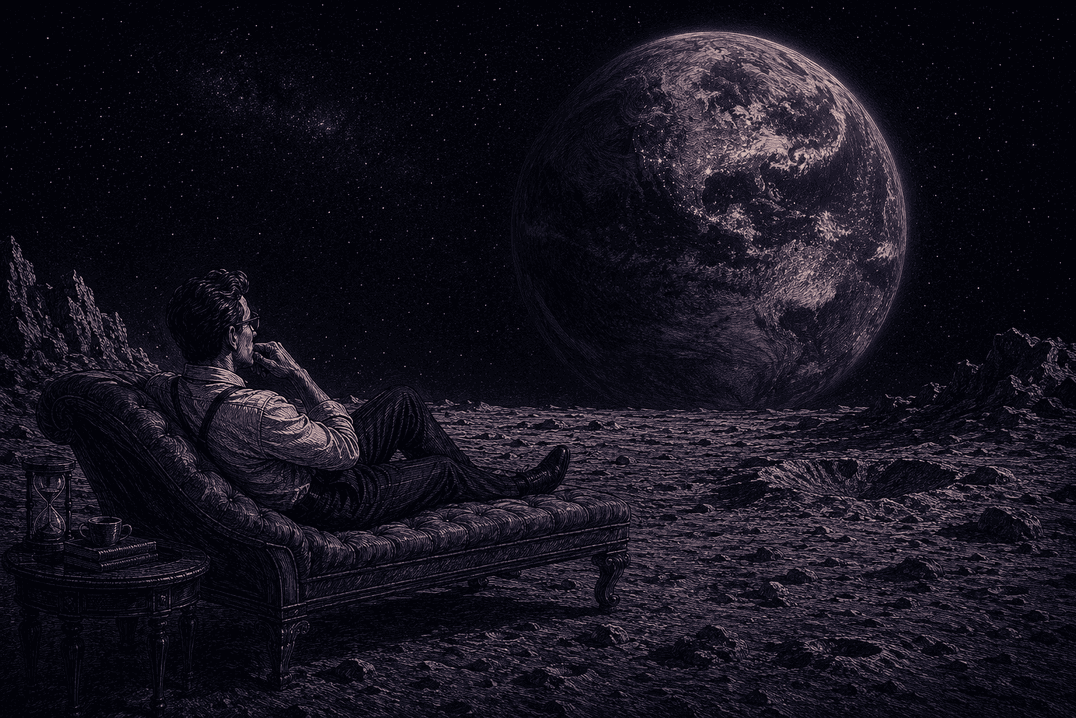 Being great—in whatever way you define greatness—is invariably embracing a proportionate void.
Not because life is cruel (it is, but that’s not the point here). But because expansion and void are the same phenomenon viewed from different angles. The universe doesn’t have a void despite expanding; it has a void because it’s expanding.
And the important question isn’t “how do I avoid the void?”—because there’s no way to.
The question is what you put inside it.
Those who filled it with control destroyed things. Those who filled it with creation left something behind. Those who filled it with honesty about their own size slept better, or at least more honestly restless.
(Which, to be realistic, is already quite a lot.)
Every greatness has a corresponding void. The question isn’t whether you will embrace it—it’s whether you will notice that it exists before it swallows you.