A lot of money, agency, and ethics
There’s a question nobody asks out loud at a bar table, yet everyone has pondered at least once by 2 AM: does getting rich turn you into a worse person, or does it simply reveal who you’ve always been, with the varnish of education stripped away by your bank balance?
I’ve just spent the last three days buried in the research of social psychologist Paul Piff from UC Irvine, and I emerged with a strangely familiar feeling: that of reading some LinkedIn fanfics.

More Money, Less Ethics?
Piff and a team of colleagues from Berkeley and Toronto conducted seven different studies, combining field observation with laboratory experiments, and came up with a paper title that sounds like a pub provocation: “Higher social class predicts increased unethical behavior” (PIFF et al., 2012). Translated without anesthesia: the higher the social class, the greater the chance of unethical behavior.
Drivers of more expensive cars showed less respect for yield signs at intersections. In the lab, people from higher classes cheated more in games of chance to increase their chances of winning a prize, lied more in negotiations, and even swiped candies meant for kids (yes, read that twice to confirm it’s not a joke).
Piff’s explanation isn’t “rich people are born evil.” It’s subtler and, for that reason, more uncomfortable: attitudes more favorable to greed and self-interest, cultivated by the accumulation of resources, push behavior towards the dark side of the force.
Before you close the tab thinking this is just reheated Marxism: Piff himself notes that the behaviors measured are “lightly unethical” - running a stop sign, lying in business, not returning change, cheating in sales, etc. Nobody is saying that every CEO is a sociopath in hiding (well, sometimes they are - soon an article on that).
But the pattern is too consistent to be mere coincidence.
Nepo Babies and Structures of Advantage
This whole conversation becomes more enjoyable (and more uncomfortable) when you look at the icons of the “self-made man” that the internet loves to idolize.
Bill Gates dropped out of Harvard and became a billionaire by 31 - the legend usually stops there. What the legend forgets to mention is that his mother, Mary Gates, had a seat on the United Way board alongside John Opel, then president of IBM, and she was the one who started the conversation that put Microsoft on the negotiating table for the contract that defined the company (Opel himself, upon hearing the name Microsoft, replied: “Oh, that company run by Mary Gates’s son”).
Jeff Bezos’s uncle gave him $250,000 to start Amazon. Warren Buffett’s father was a congressman. And so it goes…

No one here is saying these people didn’t work or possess genuine talent. I’m saying that each person’s “starting zero” is radically different from yours, and the version that reaches you via authorized biography is a well-produced fanfic of what really happened. Pure storytelling.
The phenomenon of the “nepo baby” that became a meme in recent years is basically this, but without the Silicon Valley glamour: children of those with social, financial, or network capital entering doors that are locked for the majority. The difference between a nepo baby and a “self-made” person is rarely competence. It’s the size of the initial push that nobody films.

Success Isn’t Just Competence
And here comes the part that really stings: success is the sum of competence, effort, timing, and, above all, structural luck - only the proportion of each ingredient varies much more than the TED Talk stage storytelling admits.
This isn’t a reverse motivational coach talk like “effort doesn’t matter, give up on everything.” Effort matters, a lot. But competence without opportunity doesn’t result in outcomes, and opportunity, in the overwhelming majority of cases, is distributed in everything but a meritocratic way: networks, starting capital, market timing, geographical luck, skin color, gender, accent.
The problem isn’t having an advantage. The problem is the narrative we construct afterward, shielding that advantage from our own memory.
The Exaggerated Effect of Agency
And this is precisely where cognitive psychology steps in to explain what morals alone can’t cover: why intelligent people, capable of doing complex calculations all day, can’t simply do the most obvious calculation of all: “I was lucky.”
The technical name is fundamental attribution error: we tend to explain our own success by internal factors (talent, effort, intelligence) and the success of others - or our own failure - by external factors (luck, context, injustice). Add decades of material comfort, which reduces exposure to threats and increases the sense of control over one’s own destiny, and you have the perfect recipe for a brain that rewrites its own biography in real-time. A feast for psychologists studying the subject.
It’s not a deliberate lie. It’s cognitive bias running in the background, like a zombie process in your brain’s task manager.
Meritocracy and Monopoly
The most didactic (and viral) experiment from Piff illustrates this better than any academic paragraph could manage: a rigged Monopoly.
Two players, a coin toss that decides who is “rich” and who is “poor” in the game, and the circus is set. The rich player starts with double the money, rolls two dice instead of one, and gains more every time they pass GO. The advantages are random, both know this, it’s all above board.
What happens afterward is funny if you don’t think too hard and disturbing if you do: the “rich” player becomes more assertive, louder, takes up more physical space on the board, eats more snacks from the shared bowl, moves their pieces with more confidence, and when asked why they won at the end of the game, they point to their own strategy and skill - not the extra die they carried since the first roll.
It’s the Instagram of any successful influencer, condensed into a plastic board.

It’s worth the usual annoying disclaimer: this specific version of Monopoly has never been formally published in a peer-reviewed journal - it circulates as a video demonstration and gained fame in Piff’s 2013 TED Talk. But the academic study with real weight is from 2012, published in PNAS. Still, Monopoly illustrates with a cruel clarity what statistics can only whisper.
And the Billionaires We Love to Hate?
We can’t close this text without touching upon the trio the internet most loves to roast (and which ironically proves Piff’s point every day).
Bill Gates, in addition to the starting advantage with IBM I already mentioned, built much of Microsoft’s empire using aggressive business tactics that led to a historic antitrust lawsuit in the 1990s - the kind of hardball play that only makes sense when you’re not too afraid of the consequences.
Mark Zuckerberg spent years repeating the mantra “move fast and break things” until one of the broken things was the privacy of tens of millions of users in the Cambridge Analytica scandal, which only led to a public apology once the press exposed the scheme.
And the trillionaire Elon Musk, now the official darling of collective social media hate, has a collection of scandals ranging from being a careless employer in Tesla factories to posts on the old Twitter that have already landed him in trouble with the SEC for market manipulation (the Doge Coin case was too much).

None of the three is the “Mexican soap opera villain” that the prevailing meme suggests. But all operate within the same logic that Piff describes: the higher you climb, the less likely the fall seems, and the less seriously normal rules appear to matter.
Let’s Settle This Account
If there’s a practical lesson here - and I know I promised never to give a moral lesson on this blog, but patience, today is an exception - it’s that checking your own board from time to time isn’t weakness; it’s mental hygiene. How many dice did I roll that others didn’t? How many laps around GO did I gain for free?
I’m not asking anyone to feel guilty for being lucky. I’m suggesting that guilt isn’t the point - the point is not to confuse luck with virtue, because that’s when things get out of hand: you stop questioning the system because, deep down, you believe you deserved it.
And those who believe they accomplished everything on their own are usually the last ones willing to reform the game for the next players.

Watch Piff’s TED Talk above - Monopoly in action is worth more than any paragraph of mine.
For Those Who Wish to Dig Deeper
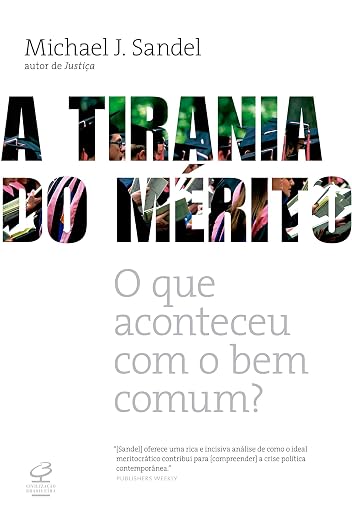
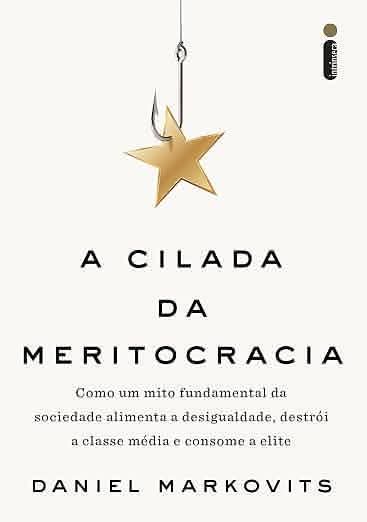
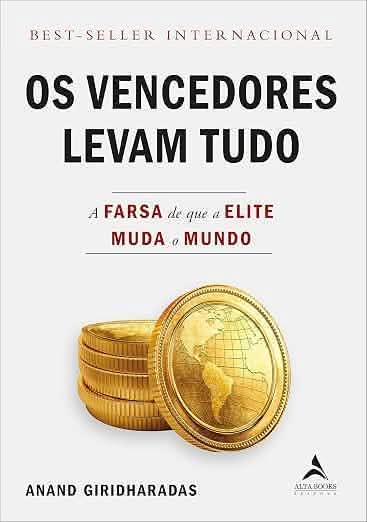
If this topic has hooked you as it did me, I’ve curated three readings that tackle the same problem from different angles - from political philosophy to the sociology of work:
Academic Reference:
PIFF, Paul K.; STANCATO, Daniel M.; CÔTÉ, Stéphane; MENDOZA-DENTON, Rodolfo; KELTNER, Dacher. Higher social class predicts increased unethical behavior. Proceedings of the National Academy of Sciences, v. 109, n. 11, p. 4086-4091, 2012.
