Crying with Gris
There’s a type of work that doesn’t want to be understood—it wants to be felt. Gris is exactly that. And perhaps that’s why it’s so unsettling: you can’t process it logically. It goes straight for that part you were trying not to stir.
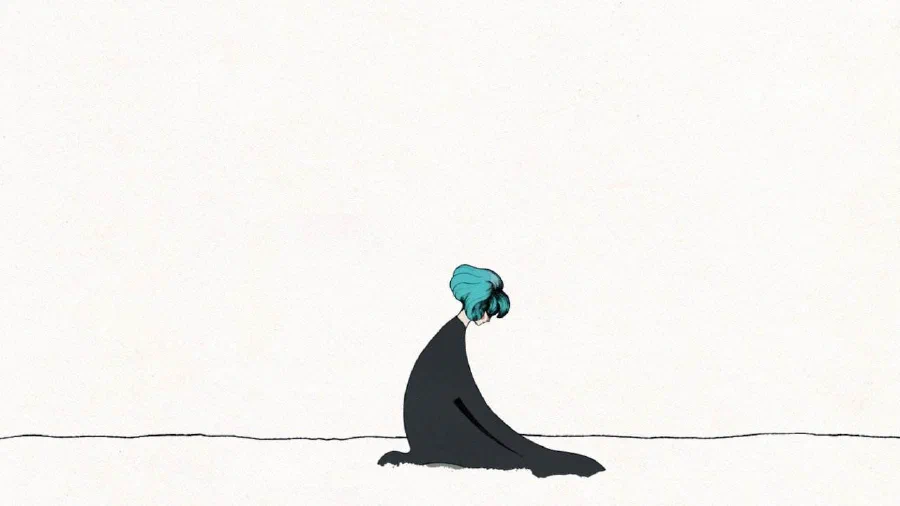
Playing it reminded me of the time I read “The Fault in Our Stars.” It was about enjoying something. And crying discreetly at three in the morning while pretending it was just an allergy. (No, it wasn’t allergies.)
At its core, Gris doesn’t talk about a story. It speaks about something we avoid naming: the slow, silent, and inevitable process of continuing to live after losing someone.
No dialogues. No explanations. No concessions.
Just you, a voiceless girl, and a broken world that lost its colors.
Grief as a system, not as a narrative
Most games tell stories. Gris builds an emotional system.
Nothing here is arbitrary:
- The dress isn’t aesthetic;
- The powers aren’t mechanics;
- The settings aren’t stages.
Everything is language. You just need to stop trying to understand and start looking.
The game takes something extremely abstract—grief—and translates it into interaction. And that completely changes the experience.
You’re not watching someone suffer. You are operating within the suffering.
The mother statue: the weight of remembering
The giant feminine figure at the start seems simple to interpret. A mother. A loss. A direct symbol.
But reducing that to “her mother died” misses the most interesting point.
The statue isn’t the person. It is the frozen version of the person. Perfect. Untouchable. Unchangeable.
In other words: it’s not about who was lost—it’s about how we choose to remember the people we love.
And this is where the real problem begins.
Because grief isn’t just absence. It’s also distortion. We don’t remember the real. We remember the ideal—there’s even a saying that a person becomes a saint after they die, right?
The game throws you exactly into that state: a world sustained by something that no longer exists but still defines everything.
When the statue breaks, it’s not just the scenery that falls apart. It’s the illusion of permanence.
The black creature: when the enemy is you
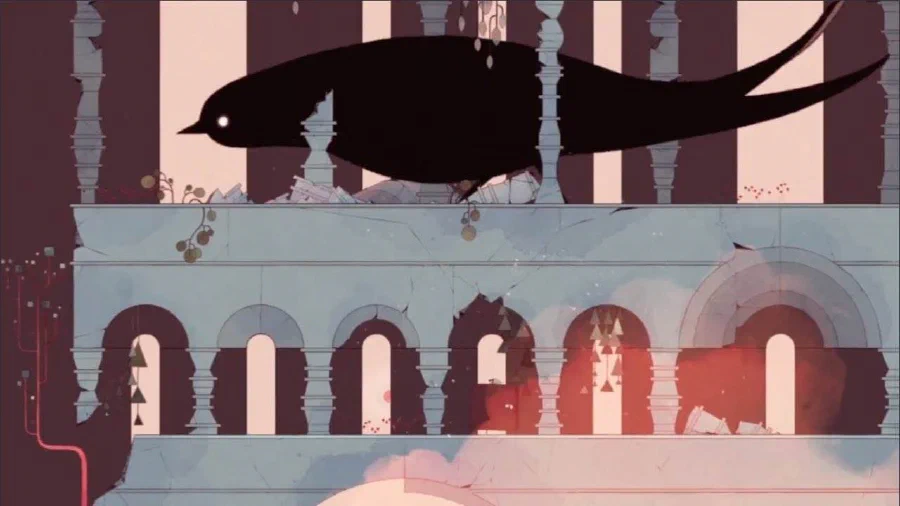
Every game needs an antagonist. Gris handles this in an uncomfortably honest way: the creature that chases you isn’t external. It’s internal.
Anxiety when it flies and pressures you. Depression when it drags you down. Confusion when it loses its form.
It changes because you change—because the pain shifts its shape as you try to deal with it.
And, like in real life, the game doesn’t give you the option to defeat it.
Because there is no victory here. There is coexistence.
(Someone should have warned us about this earlier. It would have saved a lot of people a lot of therapy time.)
The dress: learning to carry
If the statue is the past and the creature is the suffering, the dress is the present.
It’s how Gris learns to exist after the rupture.
Heavy when it needs to endure. Light when it can breathe. Fluid when it accepts to dive.
The most honest detail is that none of these forms is “better.” The game doesn’t reward you for being stronger; it teaches you to be more adaptable.
Growing, here, isn’t about eliminating the pain—it’s about changing how you relate to it.
Which, in practice, is much harder than it sounds in a nice phrase like that.
The symbols: progress that doesn’t show on the resume
From here down there are spoilers. Play before continuing.
Each chapter ends with a symbol. They don’t explain anything. They have no captions. They aren’t collectibles in the conventional sense.
It took me a while to understand what they were doing there. I swear.
But they evolve—they become more complete, more cohesive, more whole. And this says something the game never has to verbalize: emotional progress isn’t loud. There’s no epic cutscene. There’s no achievement notification. It appears in small internal integrations that, from the outside, are invisible.
The kind of thing your therapist notices before you do.
The most uncomfortable point
There’s a silent expectation when we talk about grief: that, at some point, it will “end.” That there’s a level finish with a screen saying “you’ve moved on.”
Gris completely rejects this.
In the end, the statue returns—but it doesn’t come back to life. There are no miracles. There’s no reversal. What changes is Gris. She sings again. She climbs. She moves on. And, perhaps most importantly: she says goodbye.
If I were to translate Gris into a more direct, less poetic, and more blunt phrase: you don’t get over grief—you learn to live with it without destroying yourself.
Gris works so well because it understands something that many works ignore: emotion doesn’t need to be explained to be understood. The game doesn’t tell you what to feel. It creates an environment where you inevitably feel, from the scenery to the wonderful soundtrack.
And in the process, perhaps you’ll notice something uncomfortable:
That journey isn’t just Gris’s. It’s yours too. From the beginning. And you knew that before finishing the first chapter—you just hadn’t admitted it yet.
Plus: Check the trophies that follow the five stages of grief, according to Elisabeth Kübler-Ross’s model: denial, anger, bargaining, depression, and acceptance. For each one, you have to do a specific activity. Quite creative, I must say. (And sad too)
Here is the platinum guide: https://psnprofiles.com/guide/11511-gris-trophy-guide
