600 Days With a Penguin Saving Me From Myself
Every habit tracker I’ve ever installed had a fundamental issue: me.
Not the app. Not the interface. Not the lack of features. Me— with my particular set of demands, idiosyncrasies, and a relationship with perfection that my therapist diplomatically describes as “interesting” and that any normal person would describe as hellish.
It took me years to accept that the problem wasn’t technological.

The Diagnosis Therapy Gave Me Without Anesthesia
After long sessions in cognitive-behavioral therapy, we reached a conclusion I already knew but refused to admit: I didn’t have a problem with habit trackers. I had issues with three specific things that any habit tracker inevitably triggered in me.
1 - Need for Absolute Control.
Not reasonable control. Surgical control. If I want to cultivate a habit every two days? What if I want a habit that only makes sense on Tuesdays and Thursdays? What if I want to deactivate a habit for two weeks because I traveled and then reactivate it without losing my streak? Most apps treat this as an edge case. For me, it was a prerequisite.
2 - Perfectionism.
Anyone who knows me personally has seen this drama unfold. A pixel out of place in a layout bothers me. A habit not marked on a day breaks the perfect streak, and that broken streak triggers a mental process that goes from “I failed today” to “this app doesn’t work” in approximately 11 seconds. Rational? No. Me being me? Completely.
3 - The Curse of High Abilities.
Repetitive tasks get boring quickly. It’s a fact. And very few things are as repetitive as opening an app, checking a box, and closing it. After two weeks, the action loses any neurological reward and you simply stop opening the app— because your brain has already cataloged that as boring and moved onto the next interest.
These were three distinct issues, with distinct origins, that any generic habit tracker activated simultaneously. A perfect trifecta of self-sabotage.
I needed a savior. I just didn’t know it would come in the form of a penguin.
Finch and the Cognitive Hack That Worked
Finch isn’t a habit tracker. Or rather: it’s a habit tracker disguised as an existential tamagotchi—and this distinction matters more than it seems.
You create a bird (which yes, is a penguin, don’t convince me otherwise!), give it a name, choose a color and an initial personality trait. From there, every habit you check off becomes energy for the little creature to carry out its daily adventures around the world or in themed missions, the current one being “The Wizard of Oz”— which I genuinely enjoyed!
The more you do for yourself, the more the penguin grows, travels, and develops personality.
Is it low-intensity emotional manipulation? Yes. Does it work? Also yes.
But what hooked me wasn’t the cute penguin. It was the three features that, either by accident or by very smart design, simultaneously defused exactly the three problems I had.
1 - Control: The App That Doesn’t Judge You for Being Weird
The customizability of habits in Finch is absurd in a good way.
You define each habit with its own frequency— daily, weekly, monthly, or completely customized. Want a habit that happens only on Mondays, Wednesdays, and Fridays? Done. Want to mark something as “every three days”? You can. Want to pause a habit for a week without deleting it? That option exists.
For someone who has always wanted a level of refinement that apps treated as unnecessary whimsy, this is… silently revolutionary. No one is going to ask why you need a habit on Tuesdays and Thursdays. The app just lets you do it.
More importantly: if you miss a day, nothing catastrophic happens. No red failure bar. No dramatically reset counter. Finch simply asks if you want to restart the streak— and moves on. The app has no interest in shaming you; it wants to keep you on the journey.
(This seems basic and it should be. But you’d be surprised at how many apps construct punishment systems disguised as motivation.)
2 - Perfectionism: When the App is More Zen Than You
The absence of punishment for failure is not a design oversight— it’s a deliberate choice and probably the most important one Finch made.
The app understands, in some way, that the perfectionist doesn’t need more pressure. They need less friction. The difference between “I failed today, streak lost, I give up” and “I failed today, the penguin will stay home tomorrow, but that’s okay” is psychologically enormous— and it’s exactly this distinction that keeps perfectionists engaged longer.
Finch also has a radar chart that builds your avatar’s personality profile based on your habits and responses over time. It’s not a performance graph— it’s a mirror. You see the penguin becoming a digital version of you: your choices, your patterns, your priorities.
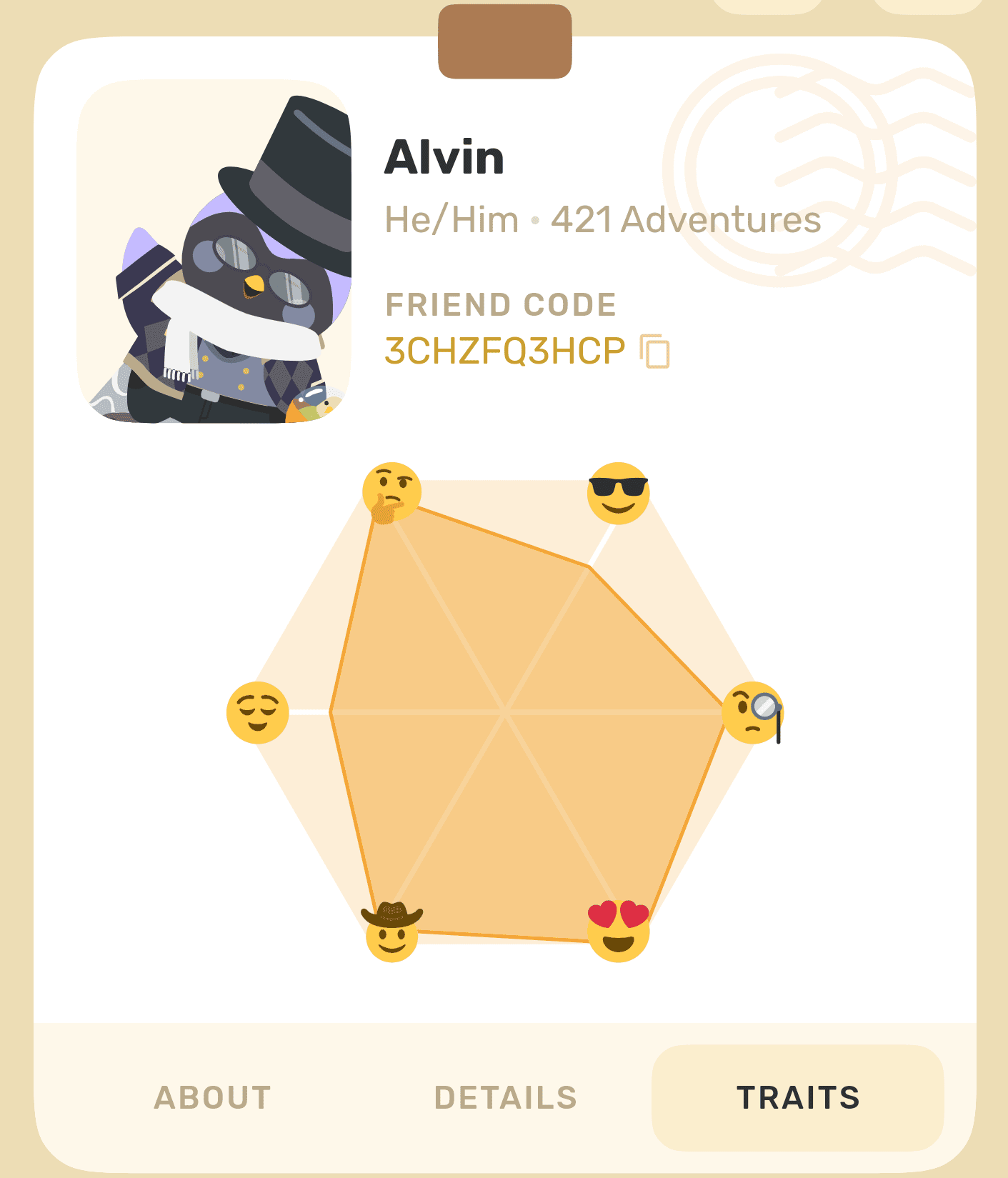
For someone with perfectionism, this is curiously therapeutic. You’re not looking at a graph of failures and successes. You’re looking at a portrait of who you’re becoming. It’s a frame difference that made all the difference for me.
3 - AHSD: Gamification as Benign Deceit
This is the most delicate point—and the most effective one.
Finch works for those with high abilities because it doesn’t pitch itself as a habit app. It has journeys and themed adventures that change periodically. It has a rewards and achievements system with diamonds you can use to buy clothes and decorations for the penguin. There’s the possibility of adding a pet for your pet—a virtual pet for your virtual pet, at a meta level that I deeply respect. It has friends who also use the app, with whom you can share your progress and send “vibes” of encouragement without the weight of a social network.
The app also uses light AI to generate personalized journaling prompts and quizzes about anxiety, body image, and depression—not as diagnosis, but as reflection. For those living with GAD and depression, having a space that asks you to name what you’re feeling without demanding a right answer holds value beyond the gamified.
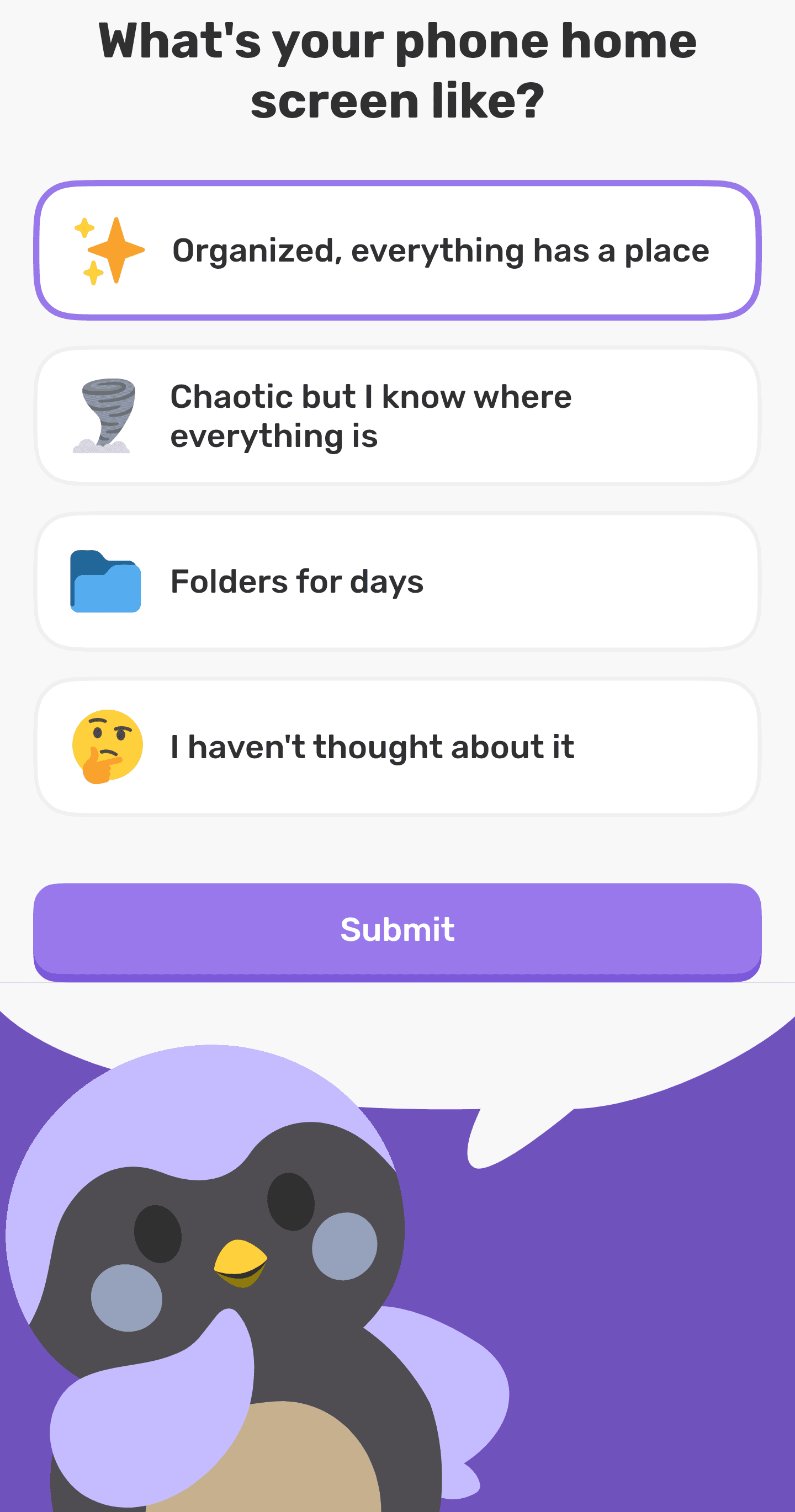
The practical result: the app always has something new. The experience is never exactly the same. And for a brain that abandons boredom with alarming efficiency, “never exactly the same” is a survival condition for any tool.
600 Days - and What That Means
Honestly? Not much, and at the same time, everything.
It doesn’t mean I was perfect. It doesn’t mean I marked 100% of the habits every day. It means I stayed on the journey for 600 days without deleting the app in a moment of frustration, without declaring that “habit tracking doesn’t work for me” and without replacing Finch with yet another cycle of searching for the perfect app that doesn’t exist.
Finch isn’t the perfect app. The customization could be deeper in some areas. The Android version has a pricing policy that borders on insulting compared to iOS. The onboarding hides some important features too much.
But perfect was never the criterion. The criterion was: can it survive contact with my way of thinking for more than three weeks?
It survived for 600 days. That’s an achievement for the developers, not for me.
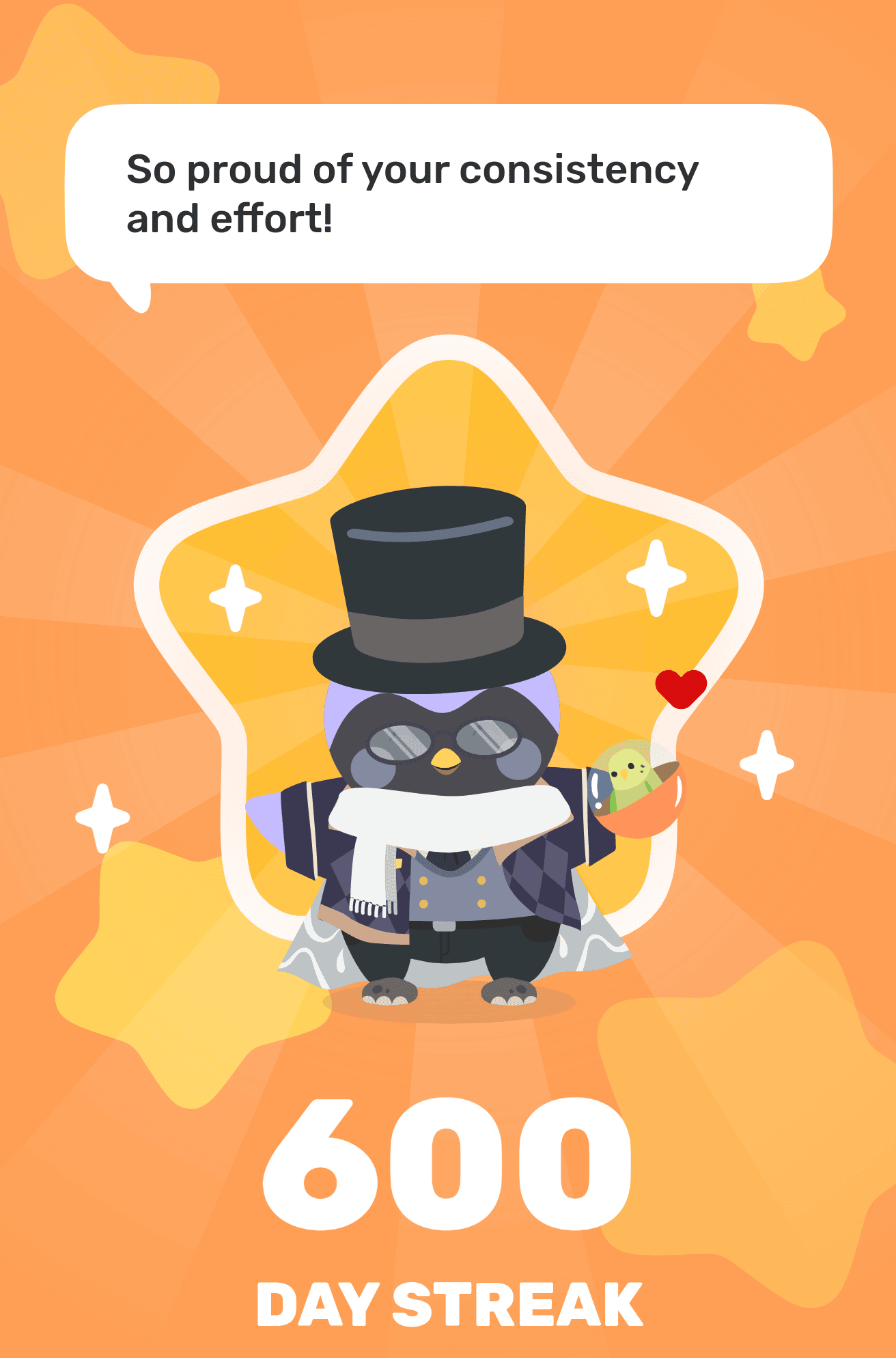
And now I’m going to keep trying to reach 1000— accompanied by myself and my virtual penguin, who at this point already has a collection of hats and an alpaca.
(No, I’m not going to explain the pet for the pet. Just download the app.)
To download Finch: